
HAROLD SHIPMAN (14 January 1946 – 13 January 2004)
An English general practitioner (GP), Shipman is known to be one of the most infamous serial killers in modern history. He was convicted of the murders of 15 patients; however it is estimated that his actual figure was close to 250 victims.
The English doctor targeted elderly and vulnerable patients killing them with lethal doses of diamorphine. As a doctor, there was unauthorized access to this medication, which was administered to patients during home visits.
On 31 January 2000, Shipman was convicted is the murder of 15 patients who were under his care as a GP. It was 4 years later that the angel of death hanged himself in his call at HM Prison Wakefield.
Early Life
Harold Frederick Shipman was born January 14, 1946 on the Bestwood council estate in Nottingham, England. He was the second of four children to Harold and Vera Shipman, a pair of working class parents who were also devout Methodists.
Harold grew increasingly close to his mother, who was diagnosed with terminal lung cancer when he was a teenager. He became fascinated by the effects of morphine on his mother, and watched as a doctor came into their home to administer it. Many experts claim that this fascination with morphine played a pivotal role in his murderous tenancies, and his modus operandi. Harold was 17 when his mother passed away in June 1963, and it is believed her death inspired him to study medicine.
At the age of 19, Harold met his future wife, Primrose. She was just 17, but she quickly became pregnant with their first child.
Medical Career
Harold Shipman attended Leeds School of Medicine, and graduated in 1970.
He began his medical profession at the Pontefract General Infirmary in Yorkshire, and in 1974, obtained his first role as a General Practitioner at the Abraham Ormerod Medical Centre in Todmorder, West Yorkshire.
The following year, Shipman was caught forging prescriptions of pethidine for personal use, and was reported to the General Medical Council in London.
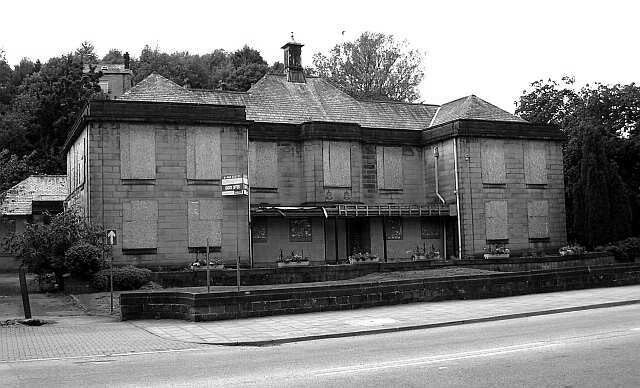
After a short investigation, the council declared that Shipman was fit to return to work, and that he was not a risk to his patients. However, in 1976, he was convicted of 83 counts of forgery and deception and was fined £600.One year on, Shipman became a General Practitioner at the Donneybrook Medical Centre in Hyde.
Shipman stayed as a GP at the Donneybrook Medical Centre until 1993. During these years, he became an accepted part of the community of Hyde and was not suspected of any illegal behaviour amongst his patients or colleagues. In 1983, he was interviewed on the Granada Television documentary, A World in Action regarding treatment of the mentally ill within the community. He claimed:
"In the past, if a patient had got a mental illness that required admission to hospital, the patient was formally admitted, undressed and placed in bed and was treated as though they had a physical illness. A consultant would come round - often in a white coat - and there was an invisible barrier between the patient and the doctor.
[In present times] If you have got a mental illness such as depression, to have you admitted to a hospital is adding another factor towards that depression. If you can stay in the community, receive your treatment in the community with your family around you and your friends, then this all adds to the speed of recovery from the illness."
The doctor left the Medical Centre to open his own surgery on Market Street, in Hyde.
The Beginning of the End
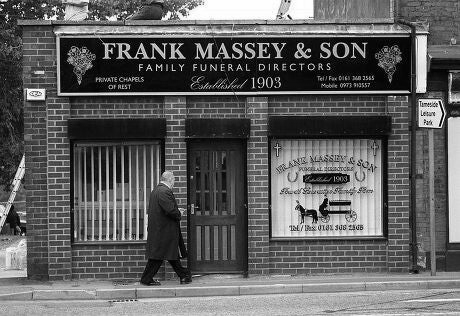
The local undertaker in Hyde, Frank Massey and Son's Funeral Parlour began to notice suspicious aspects in Dr Shipman's work. Shipman had always had a higher death rate amongst his patients that other GPs in the area, and this was always believed it was due to his high number of elderly relatives in his care.
However, the undertakers noticed that many of these deaths had many similarities, in that they were predominantly women, who were fully clothed and found sat upright in a chair or sofa, and had no previous serious health conditions.
Reports indicate that the funeral director visited Harold Shipman regarding these concerns, and was assured that there was “nothing to be concerned about.” Unsatisfied with Shipman's lack of explanation, Deborah Massey, from the funeral parlour approached Dr Susan Booth, from a neighbouring practice. She expressed her concerns to the doctor, who in turn, returned to her surgery and discussed the matter with her fellow practice owners. She discovered that her colleague, Dr Linda Reynolds was also having concerns regarding Shipman, and was growing increasingly alarmed at the amount of cremation forms she was being asked to countersign.
They called an urgent meeting in late March 1998, and unlike usual discussions, the doctors held it away from Hyde in a pub in Heaton Moor. The team discussed their suspicions, and decided to look at both their own, and Shipman's cremation forms which he has asked them to countersign. They found that over the period of several months, Dr Shipman had requested their signature on 41 cremation forms. In their own surgery over the same time span, there had been only 14 deaths in total.
The doctors reported their findings to the Greater Manchester Police that month, and an investigation was immediately launched into the the allegations made against Dr Harold Shipman. DI Smith was assigned to the case, and began by visiting Dr Linda Reynolds at Brooke Surgery. She expressed a concern over the high death rates at Doctor Shipman's surgery, adding that his death toll was far higher than in her former practice at Reddish.
DI Smith then interviewed a representative of the Pennine Health Authority, Doctor Banks. Doctor Banks was assigned to deal with complaints regarding health practitioners in the area, and was asked his professional opinion about Shipman's activities. He declared that there was nothing out of the ordinary in Shipman's notes or his actions.
Shipman continued on his usual routine, unaware of DI Smith's investigation. During the time of the investigation, a further two of his patients died, Ava Warburton and Martha Marley. Despite the seriousness of the allegations made against Shipman, no autopsies were carried out on either women. Instead, DI Smith focuses his attention to the town hall to discover how many death certificates had been registered by the doctor in the past six months.
Due to a clerical error, Smith was not handed all of the death certificates issued by Shipman. This led him to believe that the doctor was involved in far fewer deaths than he was, giving him yet another reason to believe there was nothing to be concerned about in regards to Shipman murdering his patients. Shortly afterwards, DI Smith closed the investigation, easing the minds of the majority of doctors at the Brooke Surgery. However, Lynda Reynolds remained doubtful of the findings of the investigation, and because of this, the doctors all agreed to keep a close eye on Dr Shipman.
It is now understood that a further three patients died at the hands of Harold Shipman after the investigation was closed, the final being that of Kathleen Grundy.
Kathleen Grundy's Will
On 24 June 1998, Harold Shipman arrived at his patient, Kathleen Grundy's home to allegedly collect a blood sample from her.
She was due at her local community centre by late morning, and when she did not arrive by midday, her friends and peers grew worried about her. They arrived at her home to find the front door unlocked.
When they received no answer after knocking, they entered the property, where they found Kathleen dead on the couch. As her GP, Shipman is called out immediately, who certifies she died from old age. She was buried at Hyde Chapel a week later.
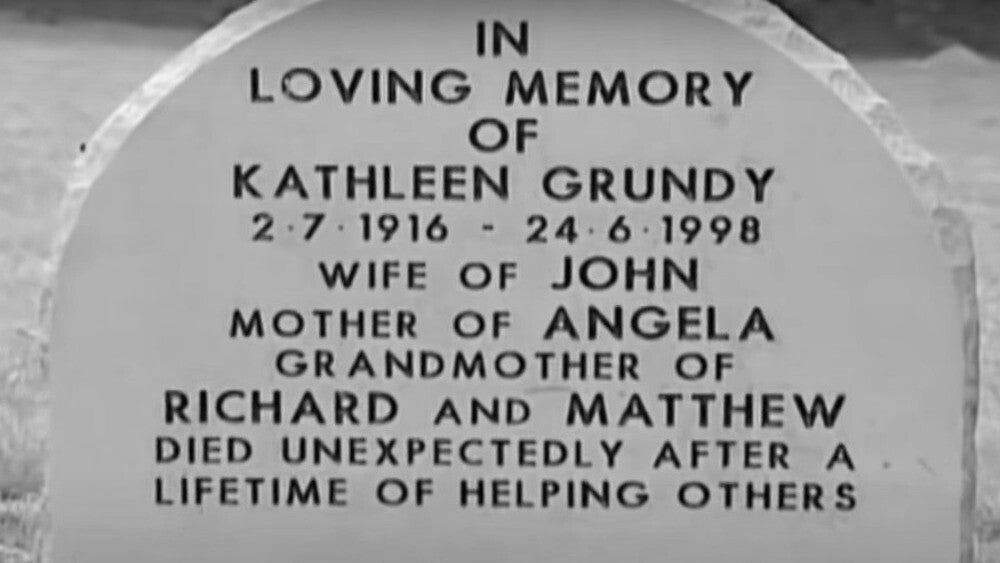
Kathleen's daughter, Angela was contacted by her mother's solicitor several days after the funeral. They informed her that Kathleen had left all of her assets to the family doctor, Harold Shipman. Kathleen's family were shocked and surprised, as they were aware that Kathleen was not close to her doctor in anyway. She had been a healthy woman and needed little contact with him.
When Angela saw the will, she immediately became aware of how amateurish the document was. It looked as though it had been typed in a rush, and also held inaccurate information. In one section it reads: 'All my estate, money and house to my doctor.' Yet Kathleen had owned two houses, and had she made that will, it would contain both properties. Angela obtained several copies of her mother's signature and compared them to the one at the bottom of the will. They did not match. Armed with such information, Kathleen's daughter reported the will to the police.
As this was the second time Harold Shipman's name came to the attention of the police, a thorough investigation soon took place. On the day of Kathleen's death, Shipman had been to her home to collect a blood sample, yet the sample could not be located anywhere. Under further scrutiny, police discovered that Shipman never handed in any blood sample from Ms Grundy.
By this point, the authorities now believed that Shipman was responsible for the death of Kathleen Grundy, at the very least, and had forged her will in an attempt to inherit £400,000. A typewriter of the same make and model the will was typed with was found in his surgery, and Shipman's fingerprints were found on the will, proving that he had come into contact with it.
Harold Shipman was by now aware that he was under investigation, but this did not stop him from carrying out his usual daily activities and joking with his patients. To the police, he appeared to be inconvenienced by the investigation, as opposed to being worried in anyway. Despite Shipman's calm attitude, the town of Hyde was rife with gossip and disbelief. Shipman had spent years building up an excellent reputation in the town, ,and many of his patients simply did not believe the accusations.
Arrest
Kathleen Grundy's toxicology reports came back, and showed that she had died from an overdose of diamorphine. On 7 September 1998, the police arrested Harold Shipman. To avoid a media circus, they asked the doctor to come to Ashton police station of his own accord with his solicitor.
According to the interviewing officers, Shipman acted confidently throughout his interrogations. He was in the firm belief that he would be released, free of all charges, and denied all accusations thrown at him. Despite the doctor's confidence, evidence was mounting against him. They had searched through his surgery's records and found many discrepancies within Shipman's notes. Specific patient's records had clearly been altered, and despite his best efforts, they did match up to the patient's death and cremation certificates.
Police ordered further exhumations to take place, investigating the deaths of many more of him deceased patients.
Whilst in police custody, Shipman's surgery was flooded with the support of his patients. They could not believe he would be capable of murder, and were adamant that he was a victim of a terrible misunderstanding.
Despite the local support, evidence against Shipman was mounting. By the time his case reached trial at the end of 1999, Shipman was accused of murdering 15 of his patients.

Trial and Sentencing
Harold Shipman's trial began at the end of 1999 and lasted for three months.
On 31 January, after six days of deliberation, Shipman was found guilty of 15 counts of murder and forging a will and handed 15 life sentences to be served consecutively, with a concurrent four year term for forgery.
The doctor was led away, remaining defiant throughout. He did not give any explanation, admit his guilt, nor any wrong doings in any way.
On 11 February 2000, ten days after his conviction, the General Medical Council formally struck Shipman off its register.
Inquiry
In February 2000, Alan Milburn, the Secretary of State for Health announced that the government would fund a private inquiry into the precise activities of Doctor Harold Shipman. The aim of the inquiry was to assess what changes to the current systems should be made in order to safeguard patients in the future. Although the investigation was conducted privately, the results were to be made public. The findings were released in stages, with the concluding report being published in January 2005.
The inquiry was held in the Manchester town hall, and its proceedings were recorded on closed circuit television to the public library in Hyde. This allowed the residents of Shipman's town to follow the events closely. Throughout the inquiry, there was four main areas which under investigation:
- The extent of Shipman's criminal activities
- The actions of the statutory bodies and other such organisations concerned in the procedures and investigations which followed the deaths of Shipman's patients.
- The performance of the statutory bodies and other organisations with responsibility for monitoring primary care provision and the use of controlled drugs.
- What steps need be taken to protect patients in the future
Findings
After interviewing over 2,500 witnesses and analysing around 270,000 pages of evidence, several conclusions were reached by the inquiry. Major flaws were found in the process of death registration, the prescribing of drugs, and the general lack of monitoring of doctors actions and records.
In total, the inquiry found that Shipman murdered 250 of his patients via lethal injection of diamorphine, beginning in 1971 whilst he was working in the Pontefract General Infirmary. The vast majority of his victims were elderly women, many of whom only had minor health complaints at the time of their death. During the course of the investigation, a fellow prison inmate whom had met Shipman at Preston prison named John Harkin, was interviewed. He claimed that the convicted doctor confessed to him that he had killed a total of 508 of his patients. Harkin's allegation was rejected and dismissed as evidence by the members of the inquiry committee, and remains as conjecture as opposed to fact.
Recommendations made by Inquiry
The report called for several recommendations, in order to improve and reform various systems within Britain. Such recommendations include:
The improved training of coroners.
Tighter controls on the use of schedule 2,3 and 4 drugs by both doctors and pharmacists.
Fundamental changes in the overseeing of doctors and general practitioners.
Add comment
Comments