Albert Fish
Albert Fish was an American serial killer, with cannibalistic tenancies who claimed to have left a trail of over 100 victims in his wake. Confessing to have had “children in every state,” the self proclaimed child rapist and cannibal was arrested in 1934 after sending a harrowing letter to one of his victims' parents. He was put on trial for the murder and kidnapping of Grace Budd, found guilty and executed by the electric chair.
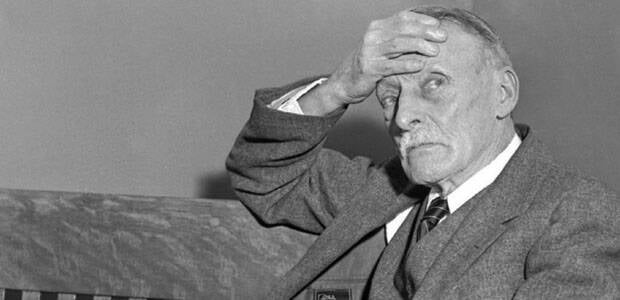
Early life
Fish was born to Randall and Ellen in Washington, D.C on 19 May 1870 and was the youngest child out of four living siblings. He had two brothers, Walter and Edwin and a sister named Annie, and changed his name to commemorate their dead brother, Albert. When Fish was born, his father was 75 years old, and was 43 years older than Fish's mother, Ellen.
The family had a history of mental illness. Fish's uncle was known to suffer from mania, one of his brothers was confined to a state mental hospital, and his sister was diagnosed with a 'mental affliction.' Several other family members were also known to have been diagnosed with mental issues, as was his mother, who suffered from aural and visual hallucinations.
Randall worked as a river boat captain for several years before the birth of his youngest son. By 1870, he was working as a fertilizer manufacturer. He died five years later from a heart attack,and Fish was sent to live in an orphanage by his mother, who could not cope with the children on her own. Whilst in the Saint John's Orphanage, Fish claimed that he, was subject to sadistic and brutal behaviour: “We were unmercifully whipped. I saw boys doing many things they should not have done.”
Ellen Fish was given a government job in 1880, and was able to remove her son from the orphanage, but according to Fish, the damage had already been done. Two years later, when he was 12 years old, Fish entered into a relationship with a telegraph boy. According to Fish, it was here when he was first introduced to drinking urine (urolagnia) and eating faeces (coprophagia). It was also at this age when Fish began spending his weekends at public baths and pools, so he could watch the local young boys undress.
Fish moved to New York City in 1890, and began working as a prostitute. He also claims that at this point he began raping young boys, but it is unknown as to whether this is true. Eight years later, Fish's mother set up an arranged marriage , and he went on to have six children with his new found wife: Albert, Anna, Gertrude, Eugene, John and Henry. Fish worked as a house painter from 1898, but was pending most of his free time molesting boys, most of them under the age of six. He also had a male lover, who took him to a waxworks museum. Here, Fish encountered a bisection of a penis, and became fascinated and obsessed by sexual mutilation.
When Fish was 41 years old, he sexually molested a mentally disabled man named Kedden in St. Louis, Missouri. He attempted to mutilate the 19 year olds penis with a pair of scissors, but was tormented by the look of fear on Kedden's face. He tended to the wound, gave Kedden 10 dollars and fled the city. After this, Fish often frequented brothels, and engaged in sadomasochistic behaviour towards the working prostitutes. In 1903, Fish was arrested for grand larceny, and was sentenced to imprisonment in Sing Sing.
Marriage breakdown
In 1917, Fish's wife ran away with another man, named John Straube, leaving her six children behind with Albert. Feeling the strain of single parentage, it was at this time when Fish began having auditory hallucinations and indulging in self mutilation. He inserted needles into his groin, leaving them to heal inside of him, along with hitting himself repeatedly with a nail-studded paddle.
After his arrest, a total of 29 needles were found residing in his pelvic region during an X-Ray. Fish also claims to have doused wool with lighter fluid and inserted it into his anus, setting it alight. Whilst it is believed that Fish did not sexually or physically abuse any of his own children, it is known that he encouraged their friends to spank him with his nail-studded paddle.
Fish claimed that after his wife left, he began to develop a growing obsession with cannibalism. He often ate raw meat for his main meals, feeding his children the same.
Early Attacks and Abductions
Despite a lack of evidence, Fish confessed to attacking a boy named Thomas Bedden in Delaware, 1910. He also stabbed another boy,who suffered from a mental handicap, in Washington, D.C in 1919. He told authorities that he selected victims who he thought would not be missed, should he decide to kill them. The majority of Fish's victims either suffered from some form of mental handicap or were from the African-American community. He murdered his victims using his 'implements of hell', which were a butcher knife, a meat clever and a handsaw.
Beatrice Kiel
In July 1924, Fish spotted the eight year old Beatrice Kiel playing at her parents farm on Staten Island. He offered her money to help him pick rhubarb, and she went to leave with him, when her mother saw what was going on and chased Fish away. He left promptly, but later returned and was found sleeping in the barn by Beatrice's father, Hans, and was once again chased away. During this time, Fish claimed that he was suffering from severe psychosis, and believed that he was being commanded by God to sexually mutilate and torture young children.
Fish married for the second time in February 1930 in New York to a woman named Estella Wilcox, but they divorced after just one week of their marriage. He was arrested just months later, in May, for sending an obscene letter to a woman who answered an advertisement for a maid. He was arrested again the following year, and was sent to the Bellevue psychiatric hospital for observation.
Grace Budd
Albert Fish read a classified advertisement in the Sunday edition of the New York World on 25 May,1928, which read: "Young man, 18, wishes position in country. Edward Budd, 406 West 15th Street." Three days later, Fish arrived at the Budd family home in Manhattan, and introduced himself as Frank Howard,a farmer from Farmingdale, New York. He promised the young man and his friend Willie jobs on his farm, claiming that he would send for them in a few days. He did not turn up days later, but instead, he sent a telegraph which gave a new work date.
Fish turned up on the second scheduled visit to take Edward to his 'farm' but encountered Edward's younger sister, Grace instead. Quickly, he changed his intended victim from Edward to Grace, and made up a story about going to his niece’s birthday party. He asked Grace's parents if he could take the young girl with him, and the couple reluctantly agreed. Grace left her home with Fish that day, and never returned.
The local authorities arrested 66 year old superintendent Charles Edward Pope for the crime on 5 September 1930, due to an accusation reported by his ex-wife. He spent a total of 108 days in jail before he was placed on trial and found not guilty.
Albert Fish's Letter **Trigger warning**
In November 1934, an anonymous letter was sent the to parents of Grace Budd, which eventually led to the downfall of Albert Fish. Although Grace's mother was illiterate, he son read it for her and quickly passed it on to the police.
Complete with spelling and grammar mistakes, the letter reads:
'Dear Mrs. Budd. In 1894 a friend of mine shipped as a deck hand on the Steamer Tacoma, Capt. John Davis. They sailed from San Francisco for Hong Kong, China. On arriving there he and two others went ashore and got drunk. When they returned the boat was gone. At that time there was famine in China. Meat of any kind was from $1–3 per pound. So great was the suffering among the very poor that all children under 12 were sold for food in order to keep others from starving. A boy or girl under 14 was not safe in the street. You could go in any shop and ask for steak—chops—or stew meat. Part of the naked body of a boy or girl would be brought out and just what you wanted cut from it. A boy or girl's behind which is the sweetest part of the body and sold as veal cutlet brought the highest price. John staid there so long he acquired a taste for human flesh. On his return to N.Y. he stole two boys, one 7 and one 11. Took them to his home stripped them naked tied them in a closet. Then burned everything they had on. Several times every day and night he spanked them – tortured them – to make their meat good and tender. First he killed the 11 year old boy, because he had the fattest ass and of course the most meat on it. Every part of his body was cooked and eaten except the head—bones and guts. He was roasted in the oven (all of his ass), boiled, broiled, fried and stewed. The little boy was next, went the same way. At that time, I was living at 409 E 100 St. near—right side. He told me so often how good human flesh was I made up my mind to taste it. On Sunday June the 3, 1928 I called on you at 406 W 15 St. Brought you pot cheese—strawberries. We had lunch. Grace sat in my lap and kissed me. I made up my mind to eat her. On the pretence of taking her to a party. You said yes she could go. I took her to an empty house in Westchester I had already picked out. When we got there, I told her to remain outside. She picked wild flowers. I went upstairs and stripped all my clothes off. I knew if I did not I would get her blood on them. When all was ready I went to the window and called her. Then I hid in a closet until she was in the room. When she saw me all naked she began to cry and tried to run down the stairs. I grabbed her and she said she would tell her mamma. First I stripped her naked. How she did kick– bite and scratch. I choked her to death, then cut her in small pieces so I could take my meat to my rooms. Cook and eat it. How sweet and tender her little ass was roasted in the oven. It took me 9 days to eat her entire body. I did not fuck her tho I could of had I wished. She died a virgin.'
The police investigated the letter, but were unable to verify the tale regarding Fish's cannibal friend. They were however, able to verify that the letter was accurate when describing Grace's abduction, and began the hunt to look for the author.
The envelop the letter was delivered in had a small hexagonal emblem printed on it, with the letters: "N.Y.P.C.B.A." representing "New York Private Chauffeur's Benevolent Association". The company's janitor admitted to have taken some of the stationary home with him, to his boarding house at 200 East 52nd Street, and leaving it there when he moved out. When police checked with the landlady of the boarding house, she reported that Mr Albert Fish had checked out of the same room days earlier.
She also informed police that Fish's son regularly sent money to him, and that Fish had previously asked her to hold a cheque for him. The police used this information, and waited outside the room whilst he came to pick it up. They cornered Fish and asked him to accompany them to their headquarters for questioning. He agreed, but quickly began brandishing a razor blade at the police officers. He was disarmed and taken to the police headquarters, where he made no attempt to deny the murder of Grace Budd.
During his time at the police headquarters, Fish repetitively told officers that it was Edward Budd, Grace's brother, whom he had originally set out to kill. He also added that despite the opportunity, he did not rape Grace, although he did have two involuntary ejaculations whilst strangling her.
The Trial of Albert Fish
The trial for the murder of Grace Budd began on March 11, 1935 in White Plains, New York. Albert Fish pleaded not guilty due to insanity, claiming to the court that he heard the voice of God telling him to kill young children. The presiding judge was Frederick P. Close, the prosecuting attorney was Elbert F. Gallagher,and the Defence council was led by James Dempsey.
The trial lasted for a total of ten days, and several psychologists testified regarding Fish's sexual fetishes and how they impacted upon his motives.
Fish was labelled by James Dempsey as a “psychiatric phenomenon”, who claimed that there were no reports in legal or medical records of any other person possessing so many sexual abnormalities.
The prosecution called four witnesses to testify that Fish was of sound mind. The first of these was the former manager of the Bellevue psychiatric hospital, where Fish spent time during the 1930s, Menas Gregory He claimed that while Albert Fish was abnormal, he was not insane. The defence council asked him if coprophilia, urophilia and paedophilia indicated a sane or insane person, and Gregory replied that such deviances did not make a person “mentally sick”, and that these were common perversions. The final witness for the prosecution was Fish's 17 year old step-daughter, who testified that he taught her and her siblings multiple games which involved overtones of masochism and child molestation.
The defence's chief expert witness was Frederic Wertham, who was a psychiatrist frequently used to conduct examinations for the New York criminal courts. He testified that Fish had a clear religious obsession, and was particularly infatuated by the biblical parable of Abraham and Isaac (Genesis 22:1-24). Wertham claimed that Fish believed that sacrificing a young boy would be penance for his own sins, and that if the act was not the will of God, angels would prevent him it from happening.
Edward Budd was his intended victim, but he was larger than Fish has expected, so he took Grace instead. According to Fish, he knew that Grace was female, but he perceived her as a male. In regard to the cannibalism, Wertham explained that this was a form of communion to Albert Fish, and testified that he found Fish to be insane. The defence called out a further two psychiatrists to support the claim that Fish was insane and therefore not guilty.
The Outcome
All of the jurors agreed that Albert Fish was insane, but they agreed that he should be executed regardless. They found him to be sane and guilty, and he was handed the death sentence.
Fish was taken to Sing Sin Prison in March 1935, and was executed on January 16th 1936 by the electric chair. Entering the chamber at 11:06pm, Fish reportedly helped the executioner position the electrodes onto his body and then claimed “I don't even know why I'm here.” One witness claimed that it took two jolts of electricity before Fish died, which created the rumour that the electric chair short-circuited by the needles which he had inserted into himself. However, this was later regarded to be untrue, and Fish died in the same fashion and time frame as others. He died three minutes after entering the chamber, and was buried at the Sing Sing Prison Cemetery.
Fish had given his final statement to his defence attorney, James Dempsey. It was several pages of handwritten notes that he has written just hours before his death. When asked to read the statement by reporters, Dempsey replied: “I will never show it to anyone. It was the most filthy string of obscenities that I have ever read.” To this day, Albert Fish's final statement have never been revealed.